Overview
Connection starts with conversation.
World App’s mission is to build a trusted network for real humans on the internet, enabling people to prove they are unique individuals and participate safely in the digital economy. Today, it supports 26M+ users and 37M+ World ID verifications globally.
As World App expanded beyond identity and payments, one gap became obvious: there was no native place for humans to talk to each other. Conversations were happening elsewhere, disconnected from identity, value exchange, and shared context.
World Chat set out to change that. The goal wasn’t to build “just another chat”
it was to design a secure, human-first conversation space where sending a message, sending value, and proving something about yourself could happen seamlessly, without compromising privacy.
Connection starts with conversation.
World App’s mission is to build a trusted network for real humans on the internet, enabling people to prove they are unique individuals and participate safely in the digital economy. Today, it supports 26M+ users and 37M+ World ID verifications globally.
As World App expanded beyond identity and payments, one gap became obvious: there was no native place for humans to talk to each other. Conversations were happening elsewhere, disconnected from identity, value exchange, and shared context.
World Chat set out to change that. The goal wasn’t to build “just another chat”
it was to design a secure, human-first conversation space where sending a message, sending value, and proving something about yourself could happen seamlessly, without compromising privacy.
Client
Tools for Humanity
Role
UI/UX Design Lead
Design services
Research & Strategy, UX/UI, Prototyping, Visual Design
My Role
I led the UX and interaction design for World Chat, partnering closely with product and engineering.
My responsibilities included:
Defining the behavioral foundations of native messaging in World App
Establishing design principles that balance trust, familiarity, and utility
Prototyping and validating interaction hypotheses early
Aligning cross-functional priorities into a cohesive experience
Ensuring the experience scaled with rapid user growth
This was a strategic initiative, not just a UI refresh and required a product mindset grounded in behavioral insight and strong collaboration.
My Role
I led the UX and interaction design for World Chat, partnering closely with product and engineering.
My responsibilities included:
Defining the behavioral foundations of native messaging in World App
Establishing design principles that balance trust, familiarity, and utility
Prototyping and validating interaction hypotheses early
Aligning cross-functional priorities into a cohesive experience
Ensuring the experience scaled with rapid user growth
This was a strategic initiative, not just a UI refresh and required a product mindset grounded in behavioral insight and strong collaboration.

Challenge
When Messaging Stops Feeling Safe
Chat is familiar, but trust inside chat is fragile. In most messaging apps, you don’t really know who you’re talking to. Profile photos are performative. Identity is assumed. Sending money or interacting with apps inside a chat often feels risky or awkward.
For World, this tension was critical:
How do we introduce identity, payments, and third-party experiences into chat without breaking the intimacy that makes messaging work in the first place?
The challenge wasn’t adding features. It was making sure conversation still felt human, private, and effortless.
Key Challenges
Defining native behaviour
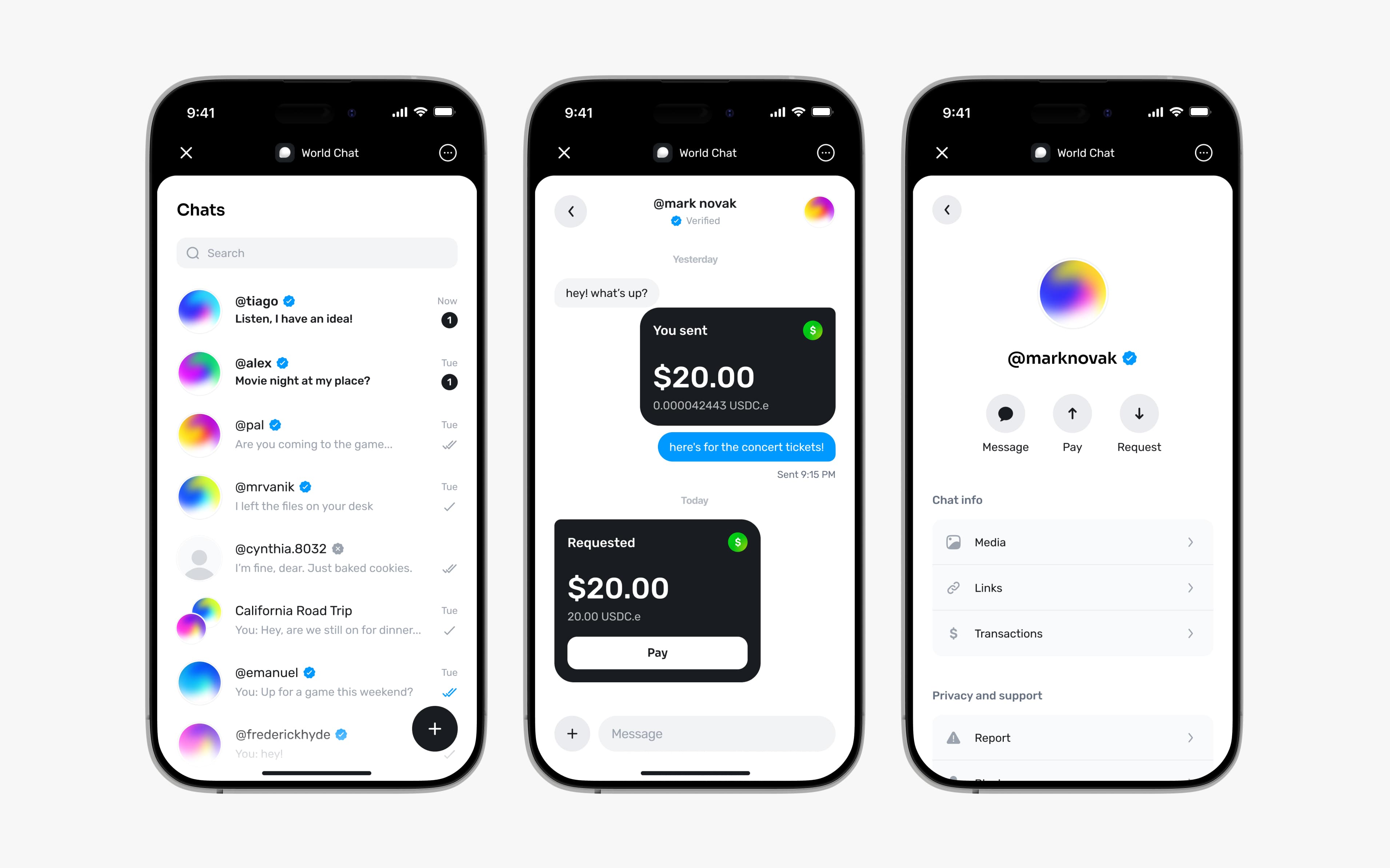
When I joined the initiative, the chat was a web-based miniapp. My goal was to define the behavior of chat as a native feature inside World app.
Tight timeline
The revamp had to be executed under a tight 4-month timeline. The north start was the event where the feature has been presented.
Uncovering hidden issues
As we dug deeper into the product, we uncovered numerous issues that needed to be addressed and solved
Before we made it native
We started by auditing the existing web chat to understand how it behaved within the product. Although it was embedded in the app, it functioned like a standalone tool.
Navigation patterns, transitions, and interactions didn’t align with the native experience, and identity and wallet features weren’t deeply integrated into the conversation flow. This analysis made it clear that chat wasn’t just visually separate, it behaved separately from the core system.
When Messaging Stops Feeling Safe
Chat is familiar, but trust inside chat is fragile. In most messaging apps, you don’t really know who you’re talking to. Profile photos are performative. Identity is assumed. Sending money or interacting with apps inside a chat often feels risky or awkward.
For World, this tension was critical:
How do we introduce identity, payments, and third-party experiences into chat without breaking the intimacy that makes messaging work in the first place?
The challenge wasn’t adding features. It was making sure conversation still felt human, private, and effortless.
Key Challenges
Defining native behaviour
When I joined the initiative, the chat was a web-based miniapp. My goal was to define the behavior of chat as a native feature inside World app.
Tight timeline
The revamp had to be executed under a tight 4-month timeline. The north start was the event where the feature has been presented.
Uncovering hidden issues
As we dug deeper into the product, we uncovered numerous issues that needed to be addressed and solved
Before we made it native
We started by auditing the existing web chat to understand how it behaved within the product. Although it was embedded in the app, it functioned like a standalone tool.
Navigation patterns, transitions, and interactions didn’t align with the native experience, and identity and wallet features weren’t deeply integrated into the conversation flow. This analysis made it clear that chat wasn’t just visually separate, it behaved separately from the core system.

Approach
Designing Through Real Conversations
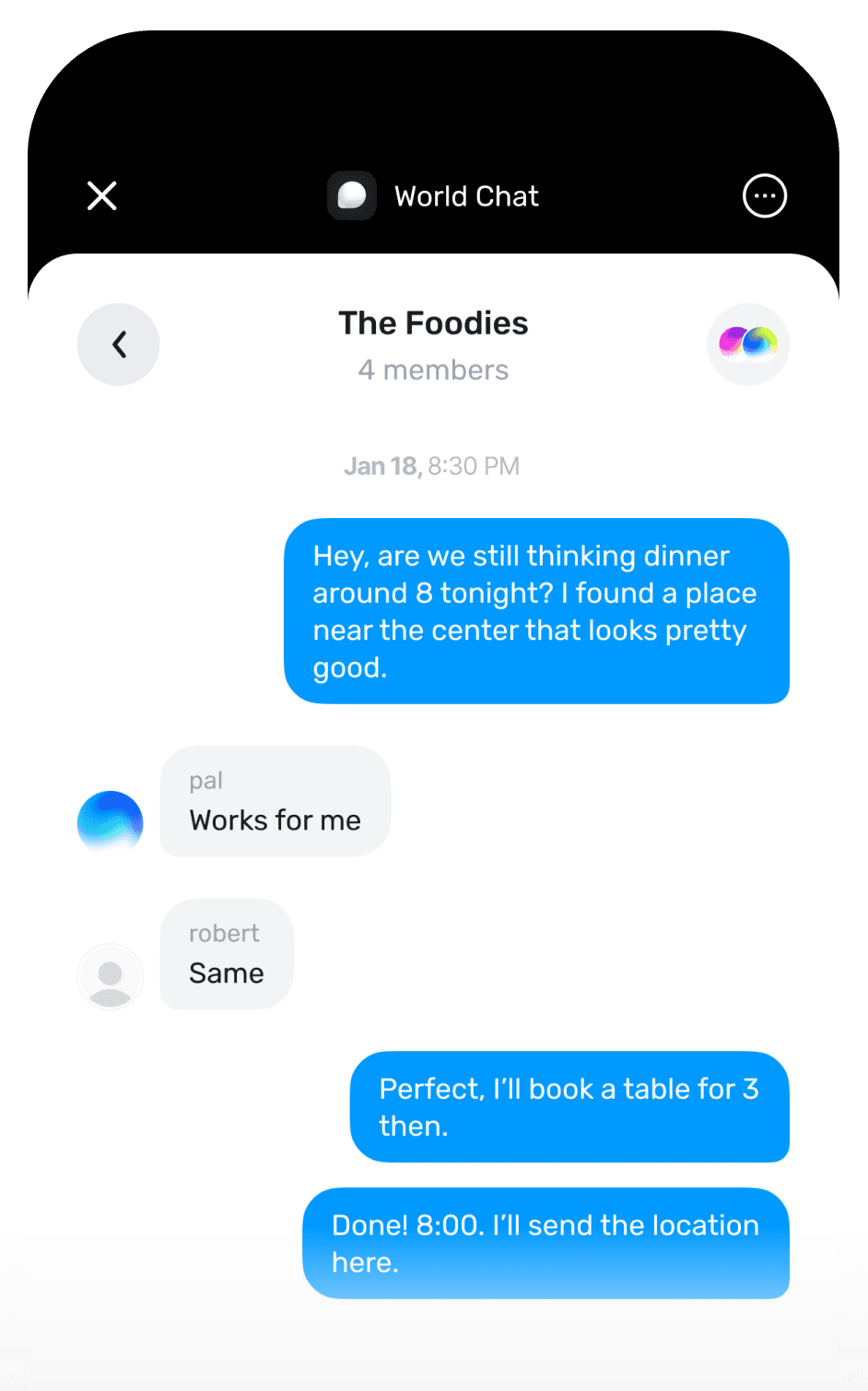
After auditing the existing web chat, I avoided jumping into abstract frameworks or technical diagrams. Instead, I started with something concrete: screens.
Chat is one of the most deeply learned digital behaviours. Rather than theorising about flows, I designed real interfaces early and interacted with them directly. I sent messages to myself. I broke layouts. I tested transitions. Very quickly this allowed me to quickly evaluate what felt native versus what still behaved like a web embed.
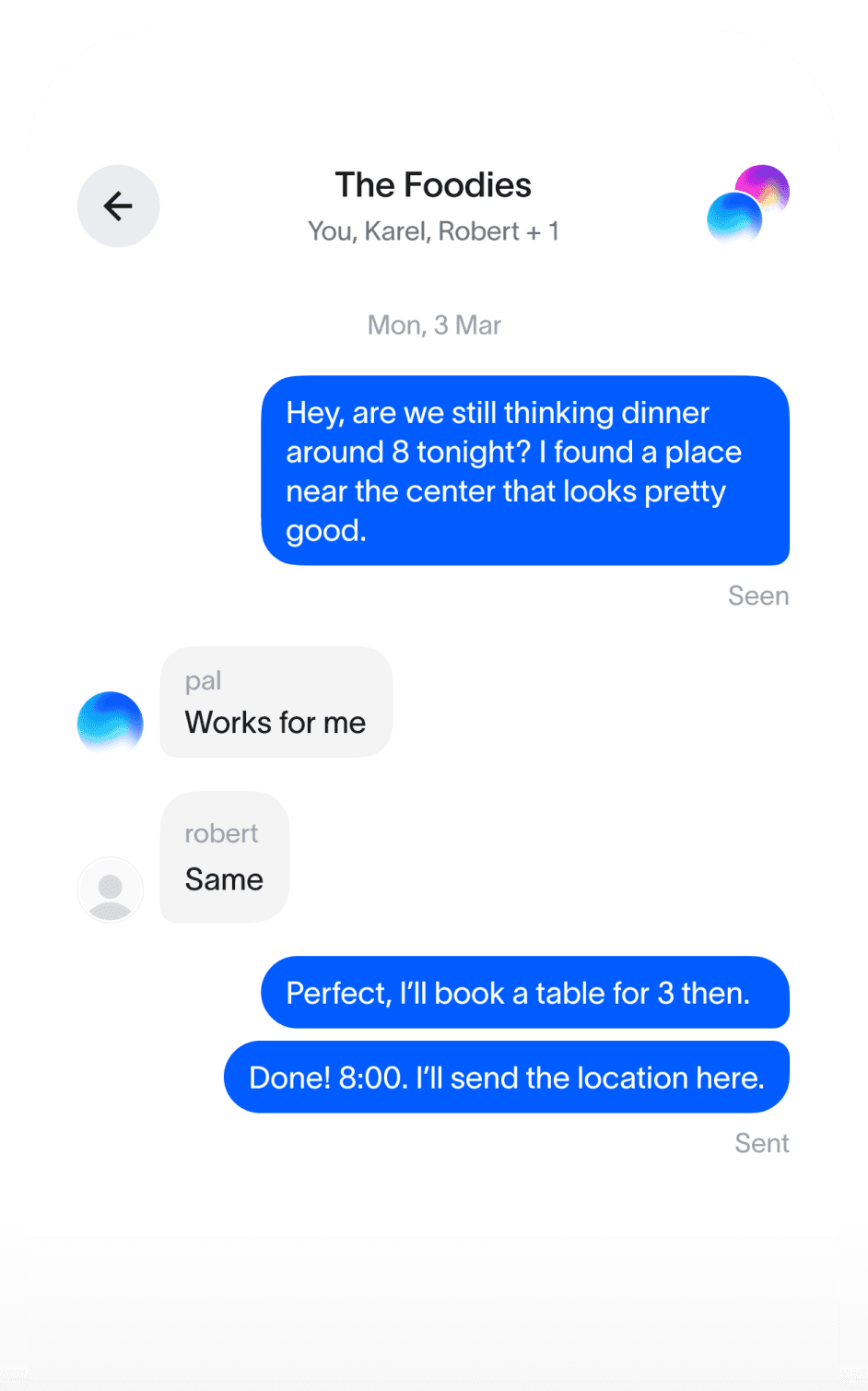
My first explorations focused on familiar chat conventions, message bubbles, avatars, attachments, because these patterns carry strong user expectations. On top of that foundation, I carefully introduced World-specific elements such as identity signals and in-chat actions.
As soon as we had a functional MVP, we moved into internal testing. Designers, engineers, and cross-functional teammates used the product actively, initiating conversations, sending assets, creating group chats, and pushing edge cases. This exposed behavioural friction early.
As the experience became more refined, we shared working builds with a small group of potential users to validate our assumptions. The most valuable feedback wasn’t about features, it was about how the product felt: “I know who I’m talking to,” “I don’t hesitate before sending,” “This feels natural.” Those reactions became our benchmark for success.
World Chat didn’t emerge from a perfect blueprint. It took shape through real interaction, one conversation at a time.
Built around people
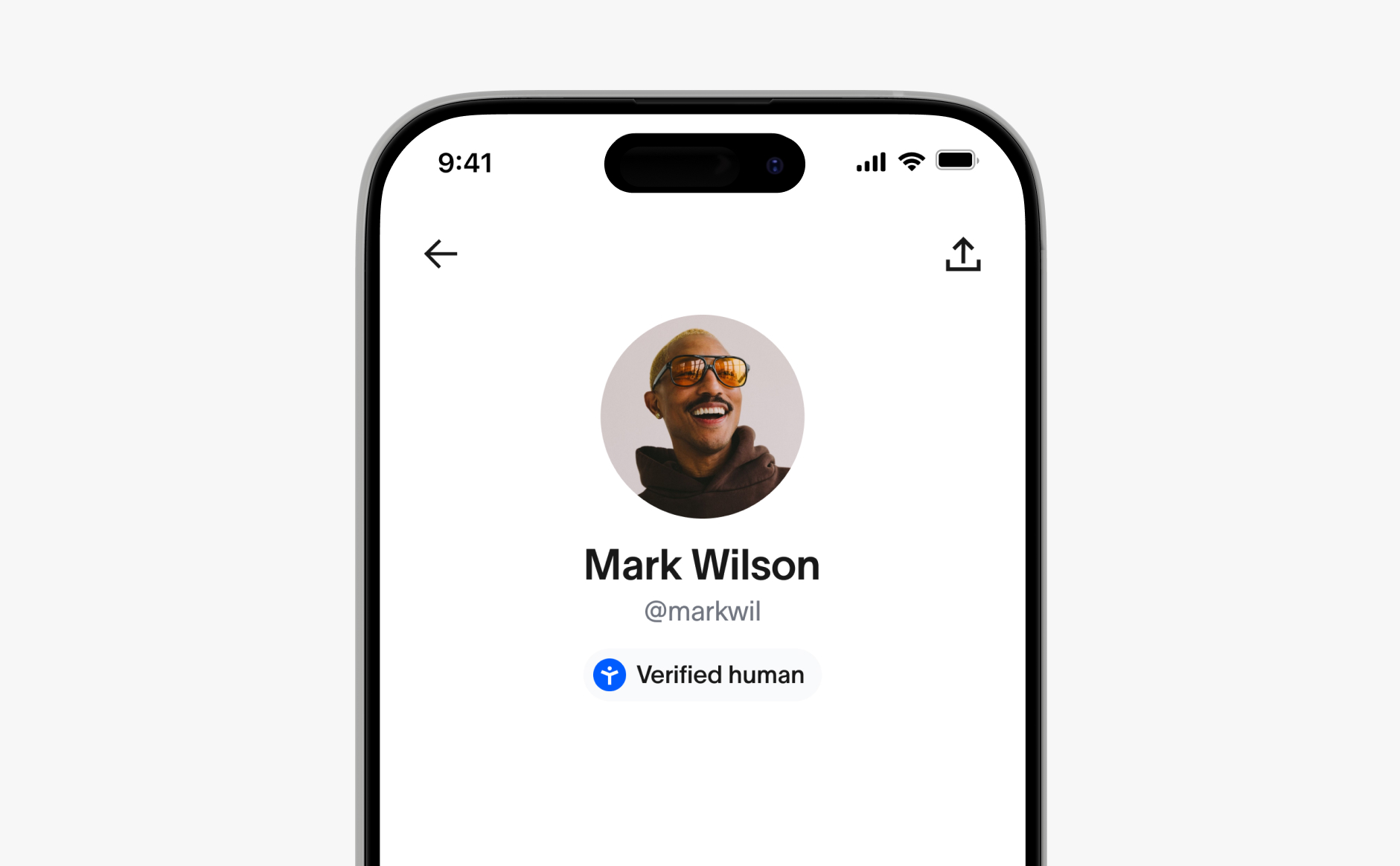
With World ID, we put real humans at the centre of every interaction. The result is an experience that feels safer, more authentic, and much higher-quality.
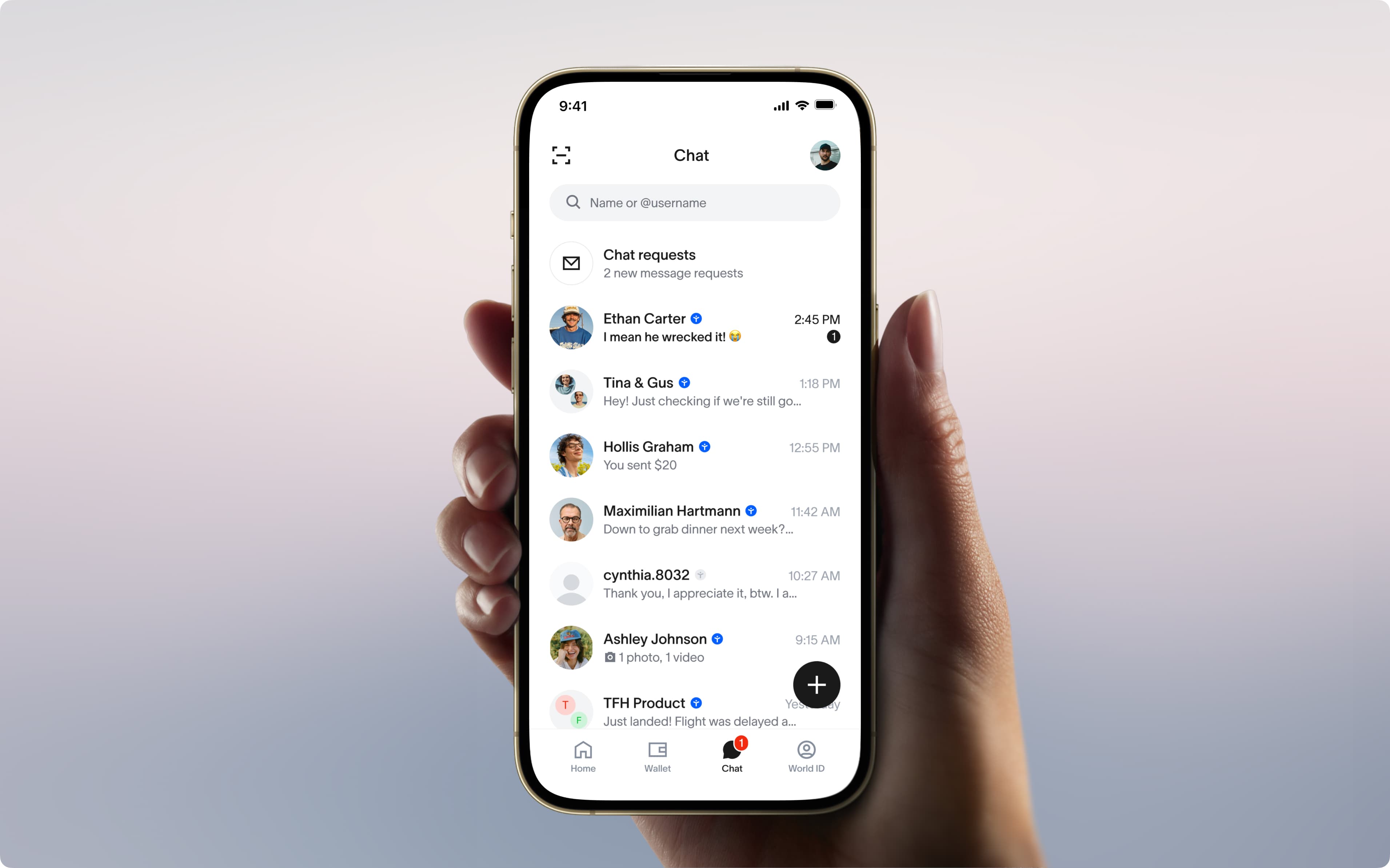
We bring this authenticity to profile pictures. Users can optionally set a photo as long as it matches the person verified at the orb, and they can then choose to share it privately in each chat.
Designing Through Real Conversations
After auditing the existing web chat, I avoided jumping into abstract frameworks or technical diagrams. Instead, I started with something concrete: screens.
Chat is one of the most deeply learned digital behaviours. Rather than theorising about flows, I designed real interfaces early and interacted with them directly. I sent messages to myself. I broke layouts. I tested transitions. Very quickly this allowed me to quickly evaluate what felt native versus what still behaved like a web embed.
My first explorations focused on familiar chat conventions, message bubbles, avatars, attachments, because these patterns carry strong user expectations. On top of that foundation, I carefully introduced World-specific elements such as identity signals and in-chat actions.
As soon as we had a functional MVP, we moved into internal testing. Designers, engineers, and cross-functional teammates used the product actively, initiating conversations, sending assets, creating group chats, and pushing edge cases. This exposed behavioural friction early.
As the experience became more refined, we shared working builds with a small group of potential users to validate our assumptions. The most valuable feedback wasn’t about features, it was about how the product felt: “I know who I’m talking to,” “I don’t hesitate before sending,” “This feels natural.” Those reactions became our benchmark for success.
World Chat didn’t emerge from a perfect blueprint. It took shape through real interaction, one conversation at a time.
Built around people
With World ID, we put real humans at the centre of every interaction. The result is an experience that feels safer, more authentic, and much higher-quality.
We bring this authenticity to profile pictures. Users can optionally set a photo as long as it matches the person verified at the orb, and they can then choose to share it privately in each chat.

Results
Blue bubbles for verified humans
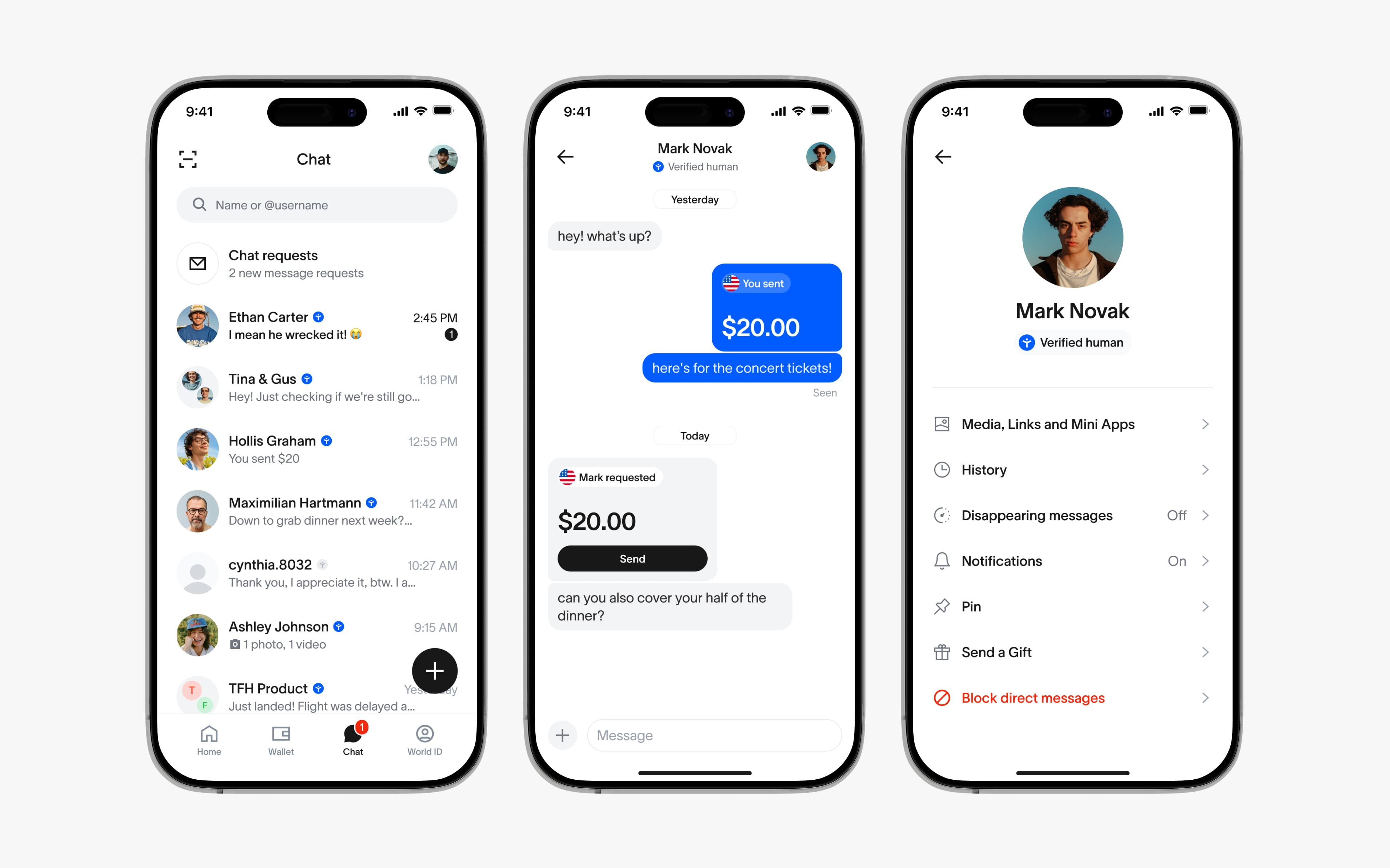
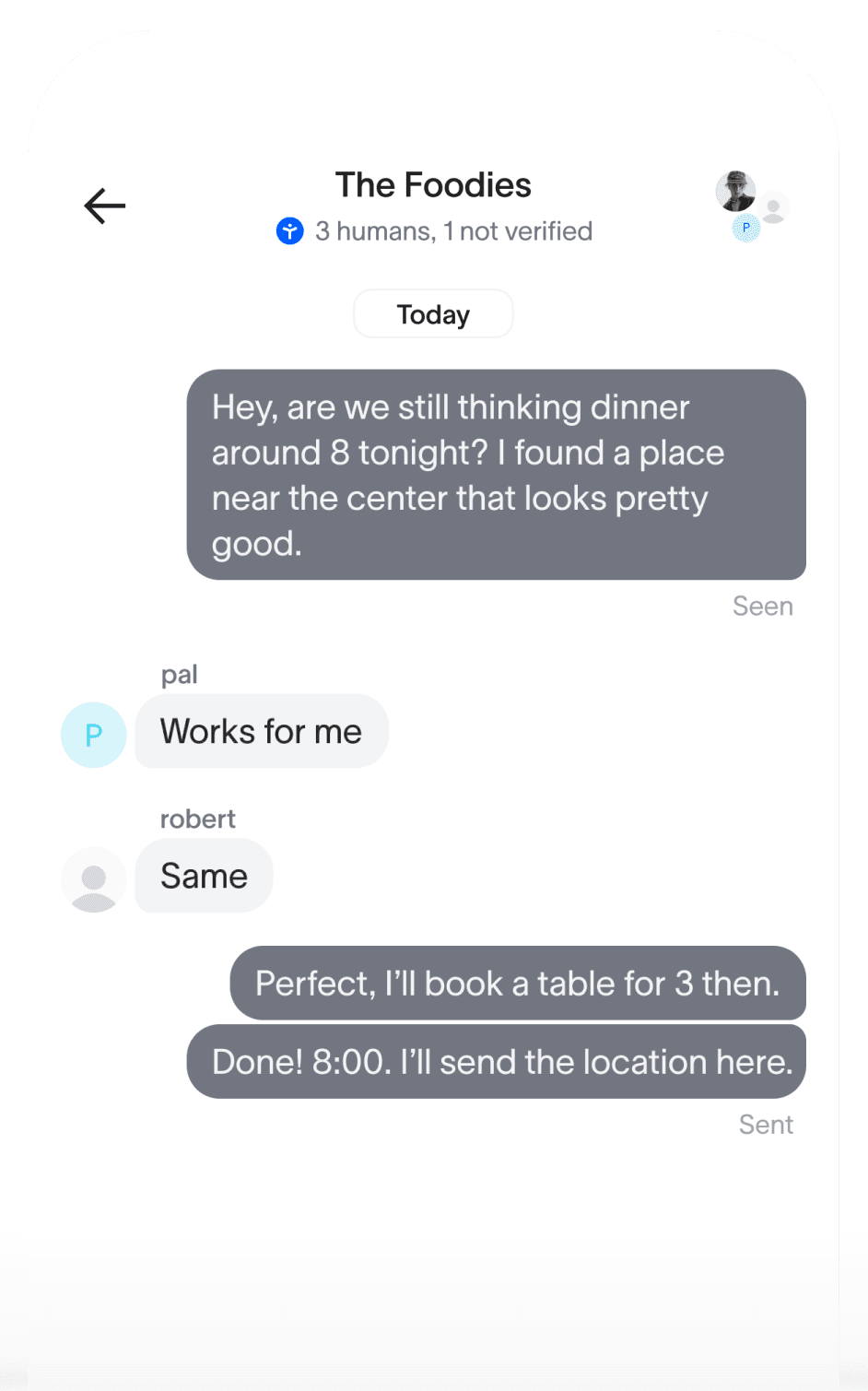
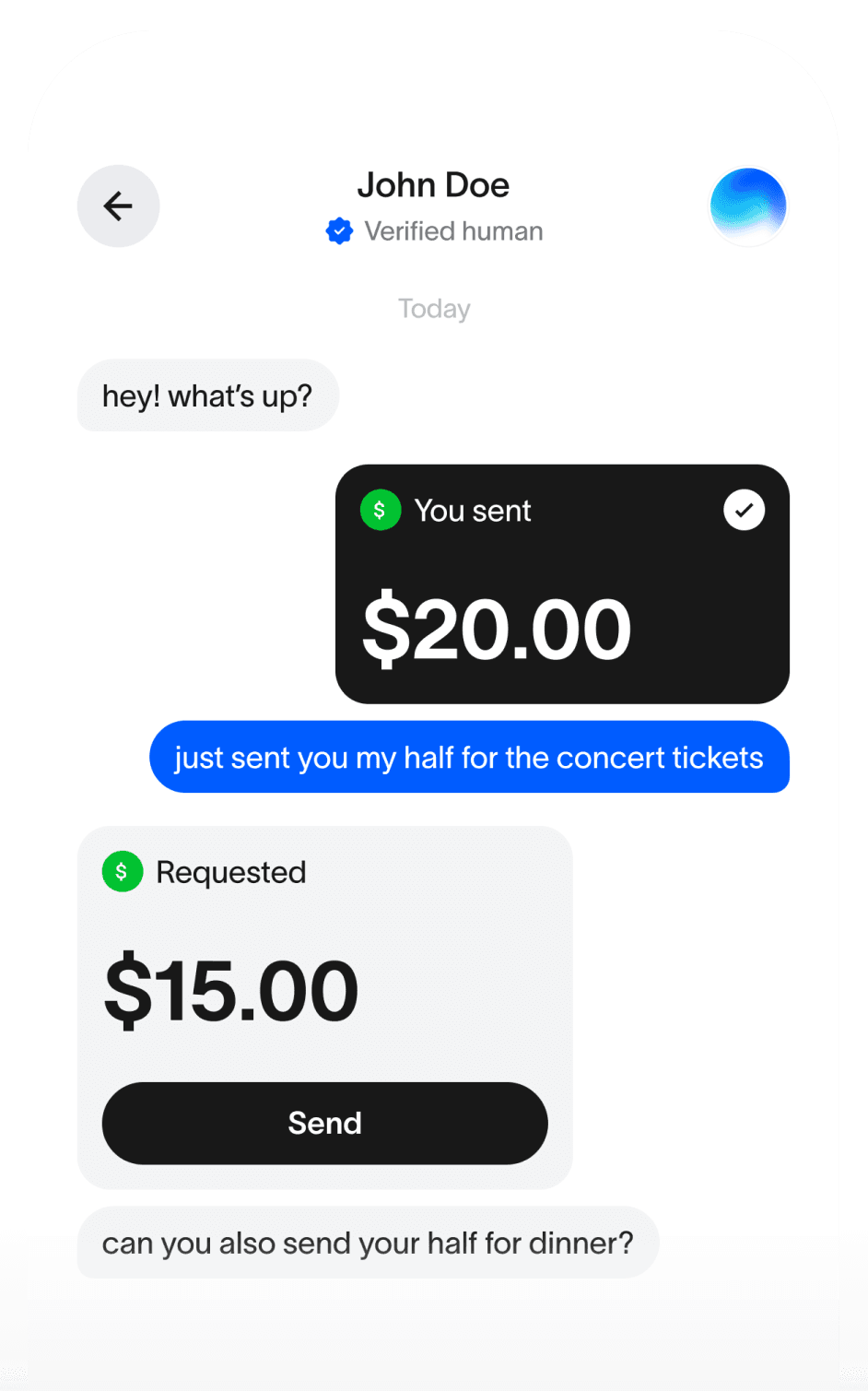
For instance, when opening a chat, it’s instantly clear if you’re chatting with a verified human through this badge where we can find close each verified profile. To empathise this, in the conversation view, if both people are verified the chat bubbles are blue. If not, they stay grey.
Blue bubbles for verified humans
For instance, when opening a chat, it’s instantly clear if you’re chatting with a verified human through this badge where we can find close each verified profile. To empathise this, in the conversation view, if both people are verified the chat bubbles are blue. If not, they stay grey.


Results
Extending Conversation Into Action
Once users feel confident about who they’re talking to, the next natural question becomes: what can they do together?
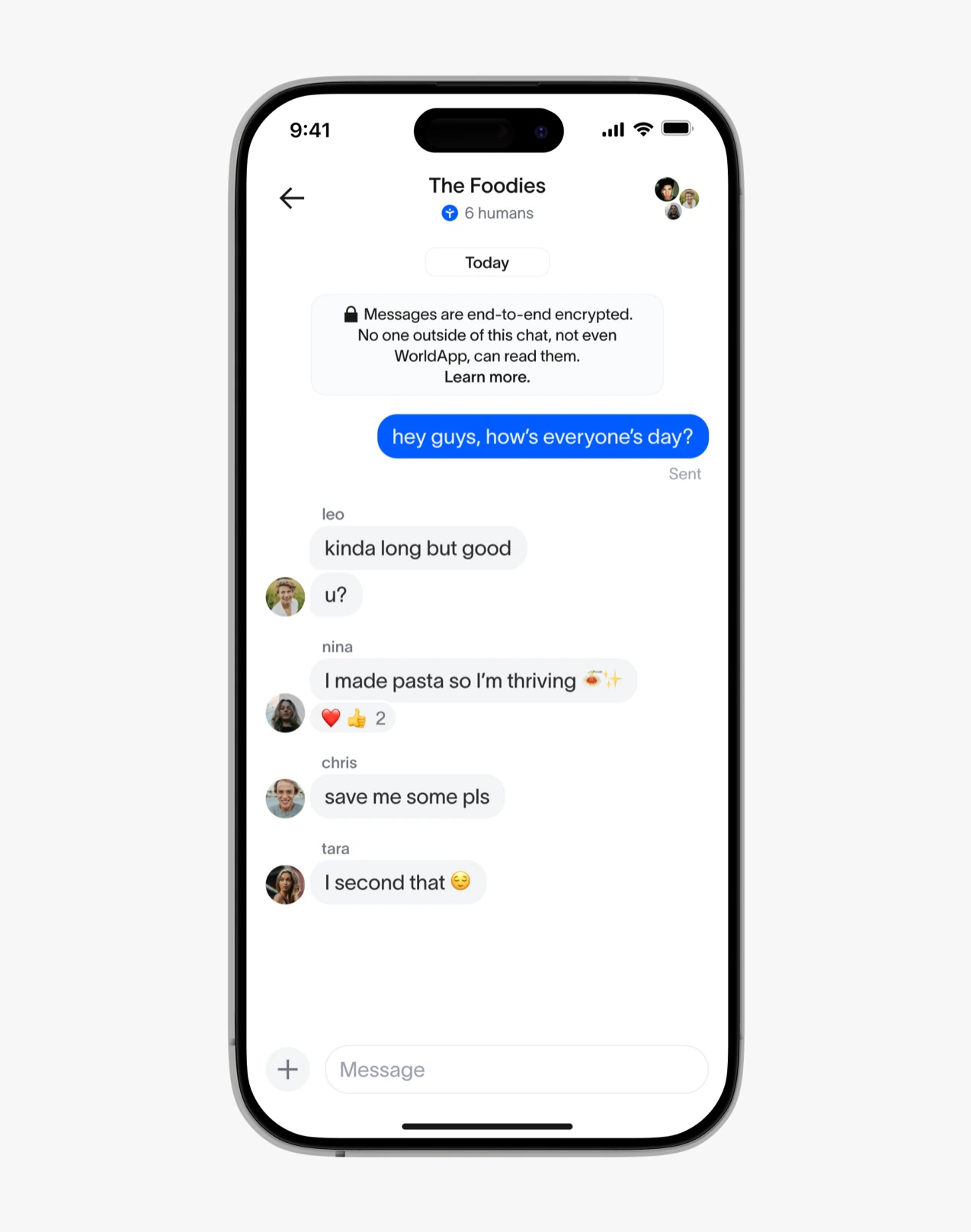
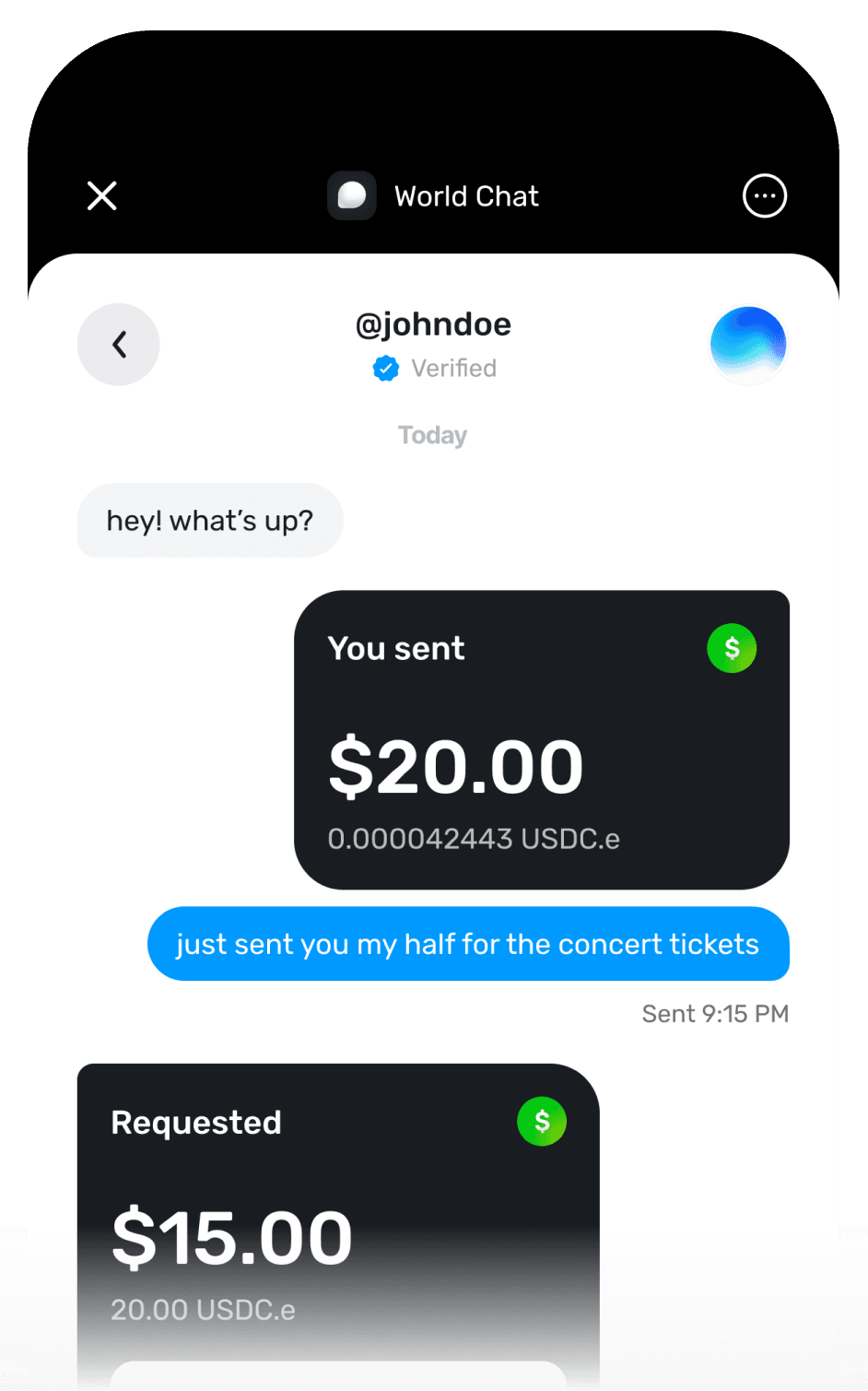
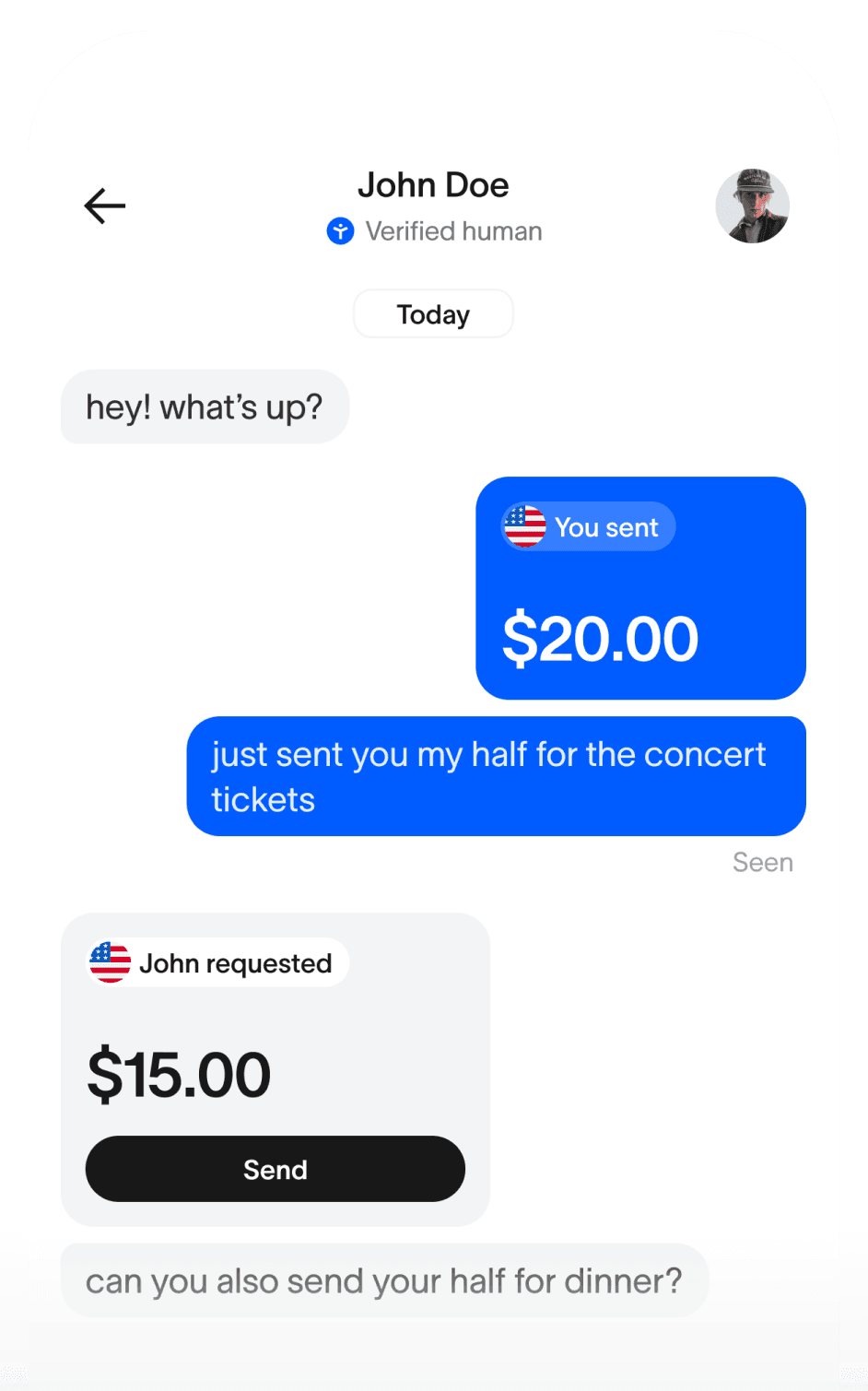
Instead of forcing users to leave the thread to access the wallet, we integrated payments directly into chat. With a single tap, users can send or request any asset in their wallet.
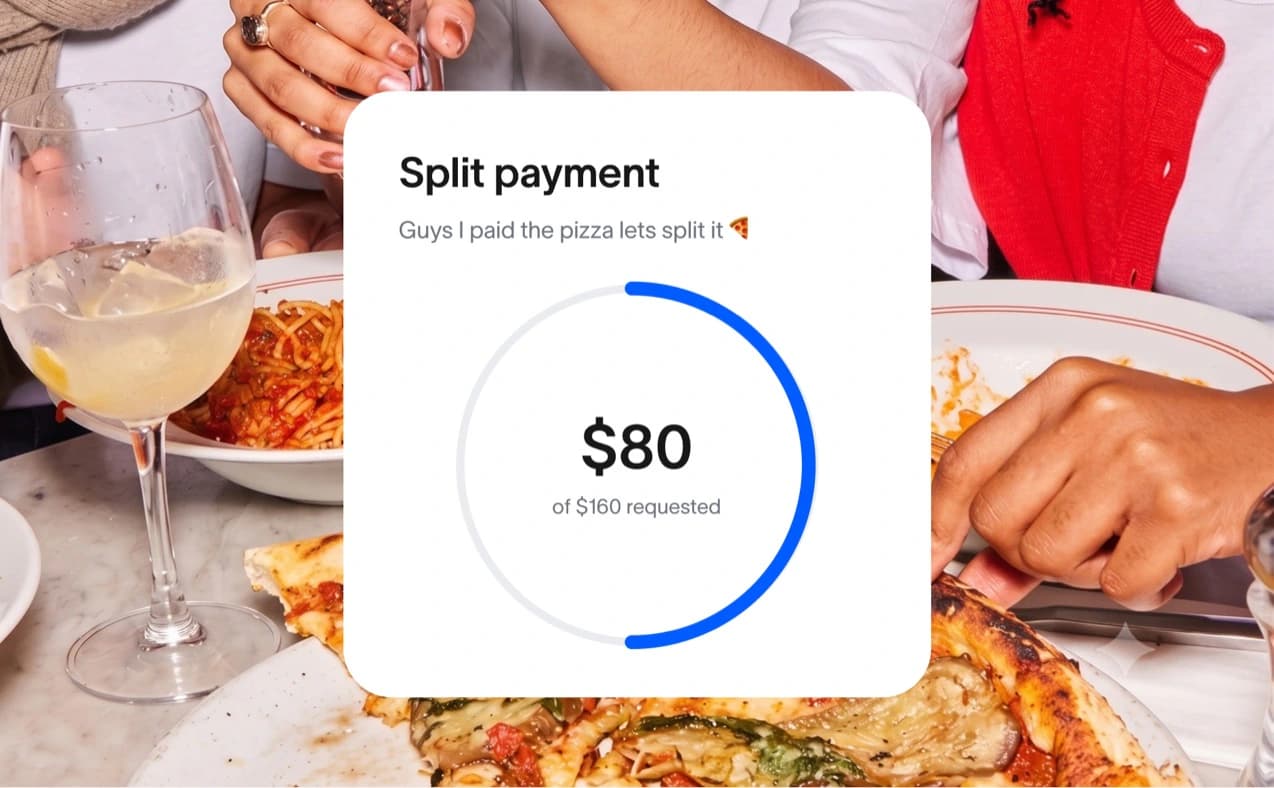
In group chats, they can split bills seamlessly, whether the payment was made via wallet, card, or QR code. The goal was to make financial actions feel like part of the conversation, not a separate transaction flow.
From a design perspective, the challenge was ensuring that financial actions felt contextual, not transactional. Payments shouldn’t interrupt conversation, they should feel like part of it.
We also introduced disappearing messages to give users more control over their privacy. In a product built on verified identity, this feature reinforces that trust isn’t just about knowing who you’re talking to, it’s about feeling safe in what you share.
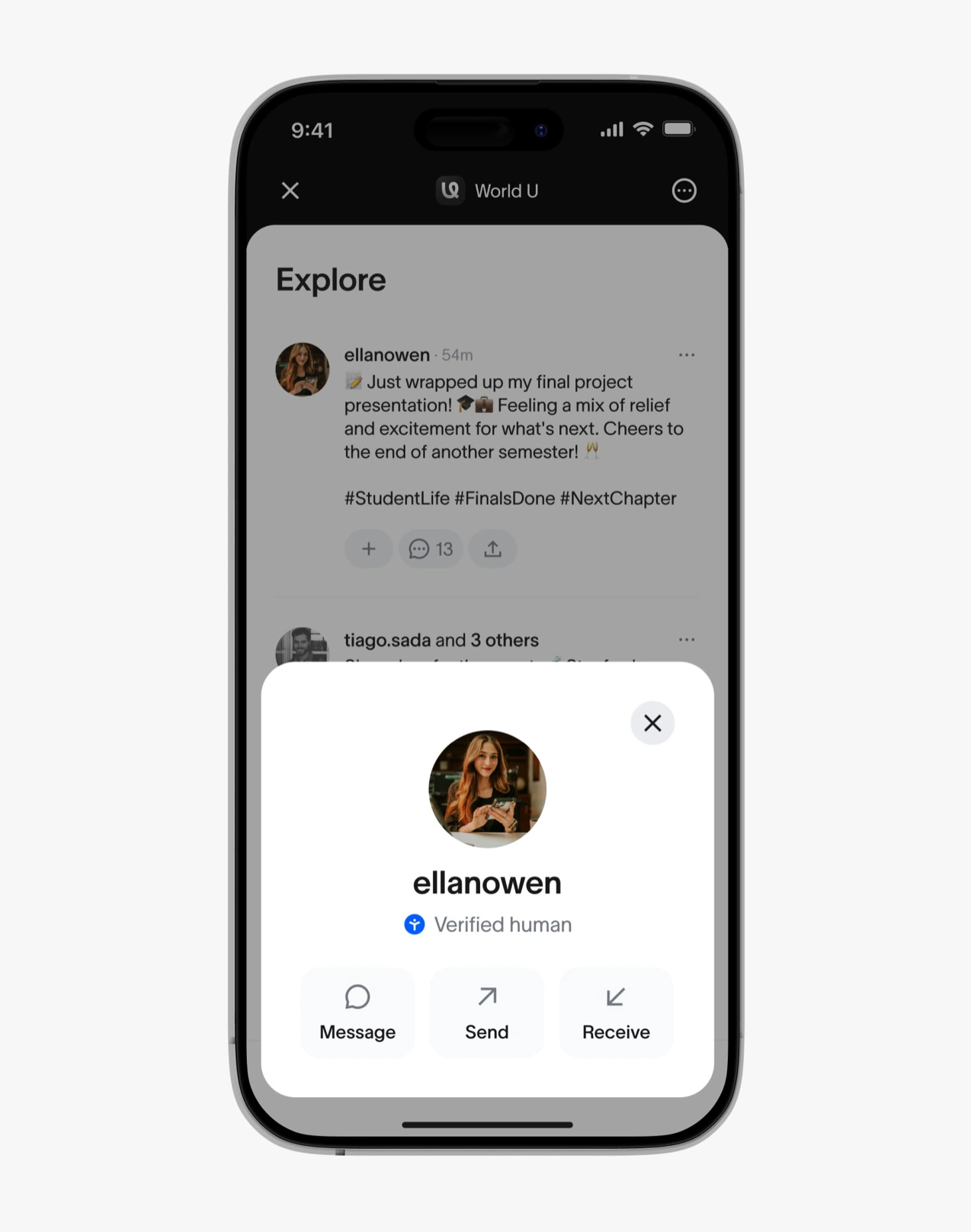
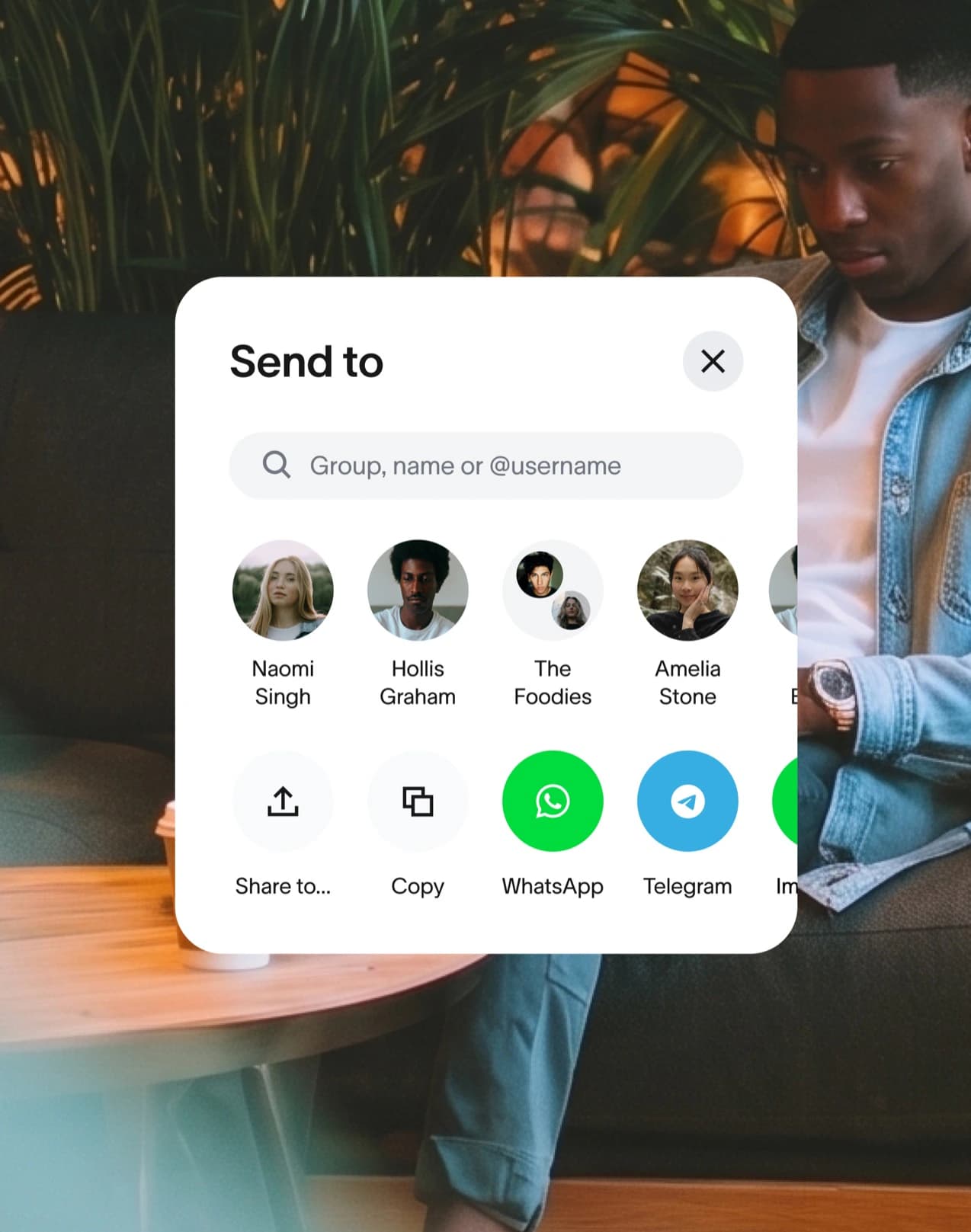
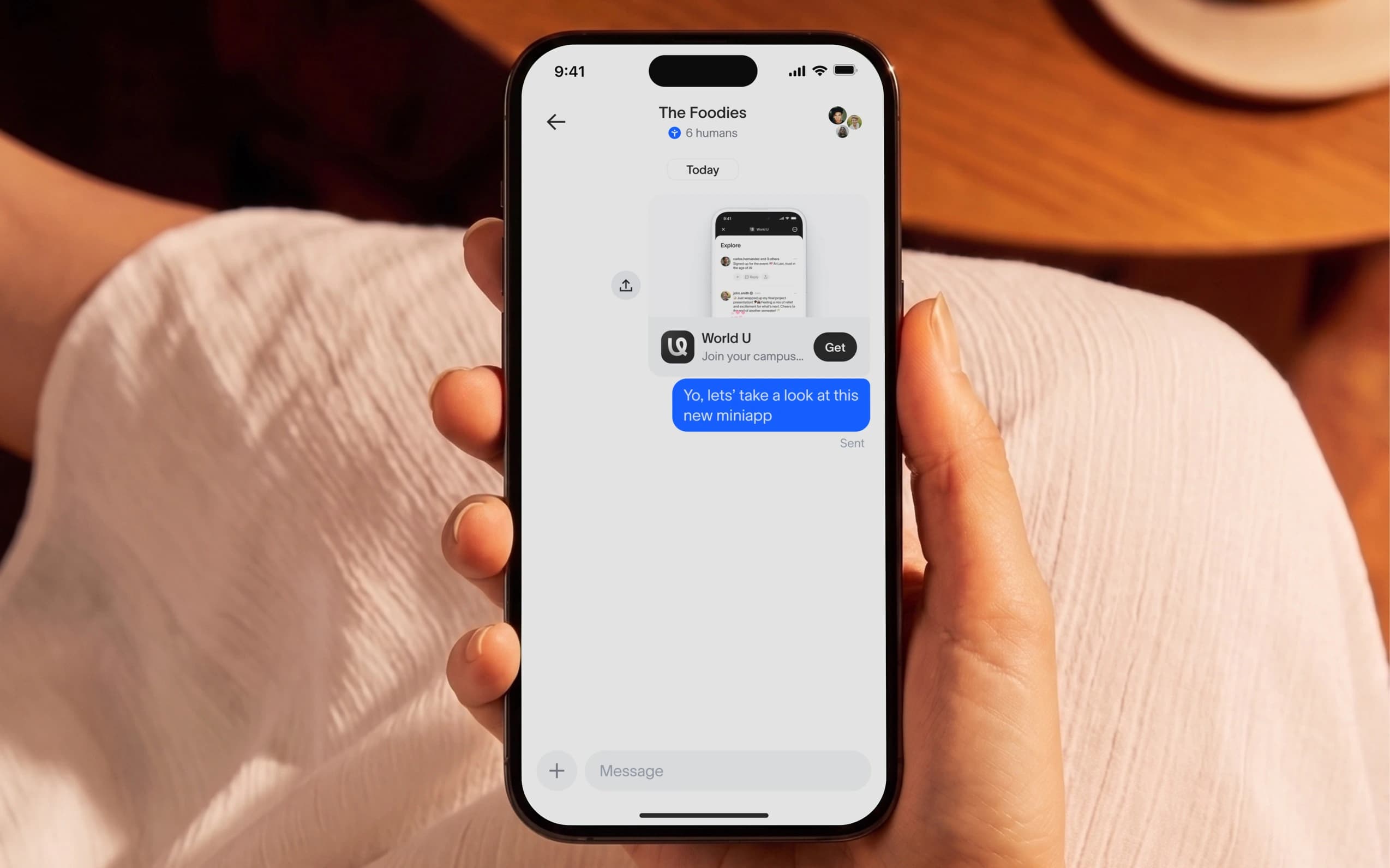
Finally, we deeply integrated chat into Mini Apps. Users can view profiles, start conversations, and bring mini apps directly into group chats. This allows people to play, transact, and explore together without breaking conversational flow. Interaction becomes shared and continuous, not fragmented across tools.
Extending Conversation Into Action
Once users feel confident about who they’re talking to, the next natural question becomes: what can they do together?
Instead of forcing users to leave the thread to access the wallet, we integrated payments directly into chat. With a single tap, users can send or request any asset in their wallet.
In group chats, they can split bills seamlessly, whether the payment was made via wallet, card, or QR code. The goal was to make financial actions feel like part of the conversation, not a separate transaction flow.
From a design perspective, the challenge was ensuring that financial actions felt contextual, not transactional. Payments shouldn’t interrupt conversation, they should feel like part of it.
We also introduced disappearing messages to give users more control over their privacy. In a product built on verified identity, this feature reinforces that trust isn’t just about knowing who you’re talking to, it’s about feeling safe in what you share.
Finally, we deeply integrated chat into Mini Apps. Users can view profiles, start conversations, and bring mini apps directly into group chats. This allows people to play, transact, and explore together without breaking conversational flow. Interaction becomes shared and continuous, not fragmented across tools.


Results
From Talking to Doing
World Chat evolved into more than a messaging surface. It became a place where people could move from conversation to action with confidence.
Sending money, splitting expenses, sending gifts or Mini Apps, coordinating with others, and interacting without friction or hesitation.
In its first two months, World Chat showed strong and sustained engagement beyond launch curiosity. The experience proved that trust can be established quickly through design alone, enabling users to understand who they were interacting with and feel comfortable taking action inside conversations.
From Talking to Doing
World Chat evolved into more than a messaging surface. It became a place where people could move from conversation to action with confidence.
Sending money, splitting expenses, sending gifts or Mini Apps, coordinating with others, and interacting without friction or hesitation.
In its first two months, World Chat showed strong and sustained engagement beyond launch curiosity. The experience proved that trust can be established quickly through design alone, enabling users to understand who they were interacting with and feel comfortable taking action inside conversations.
k+
Avg. daily active users
%
Users starting a new conversation
K+
Users who sent 5+ messages
Activation Moment
Holiday Campaign. Turning Chat Into a Social Ritual
To reinforce World Chat as a human space, we launched a Christmas campaign focused on gifting. Users could send a gift directly inside a conversation, with recipients receiving an amount of Worldcoin randomly.
This wasn’t about boosting metrics, it was about validating behavior. The campaign leaned into emotion and surprise turning value exchange into a shared moment rather than a transaction.
During the holiday period, daily message sending spiked again and sustained 30–35K active senders, showing that conversation becomes more engaging when paired with meaningful context.
Holiday Campaign. Turning Chat Into a Social Ritual
To reinforce World Chat as a human space, we launched a Christmas campaign focused on gifting. Users could send a gift directly inside a conversation, with recipients receiving an amount of Worldcoin randomly.
This wasn’t about boosting metrics, it was about validating behavior. The campaign leaned into emotion and surprise turning value exchange into a shared moment rather than a transaction.
During the holiday period, daily message sending spiked again and sustained 30–35K active senders, showing that conversation becomes more engaging when paired with meaningful context.


Learnings
Lessons Learned
Designing World Chat taught me that trust is something users read instantly through visual cues, hierarchy, and tone, not something that can be explained away with labels or instructions.
I learned that conversation itself is one of the strongest UX patterns available: when actions happen inside chat, they feel intentional and human instead of transactional.
Most importantly, I saw how much language shapes behavior at critical moments. When identity or money is involved, the right sentence, placed at the right time, can remove hesitation before doubt ever forms.
Lessons Learned
Designing World Chat taught me that trust is something users read instantly through visual cues, hierarchy, and tone, not something that can be explained away with labels or instructions.
I learned that conversation itself is one of the strongest UX patterns available: when actions happen inside chat, they feel intentional and human instead of transactional.
Most importantly, I saw how much language shapes behavior at critical moments. When identity or money is involved, the right sentence, placed at the right time, can remove hesitation before doubt ever forms.
All right reserved
© 2026
All right reserved
© 2026